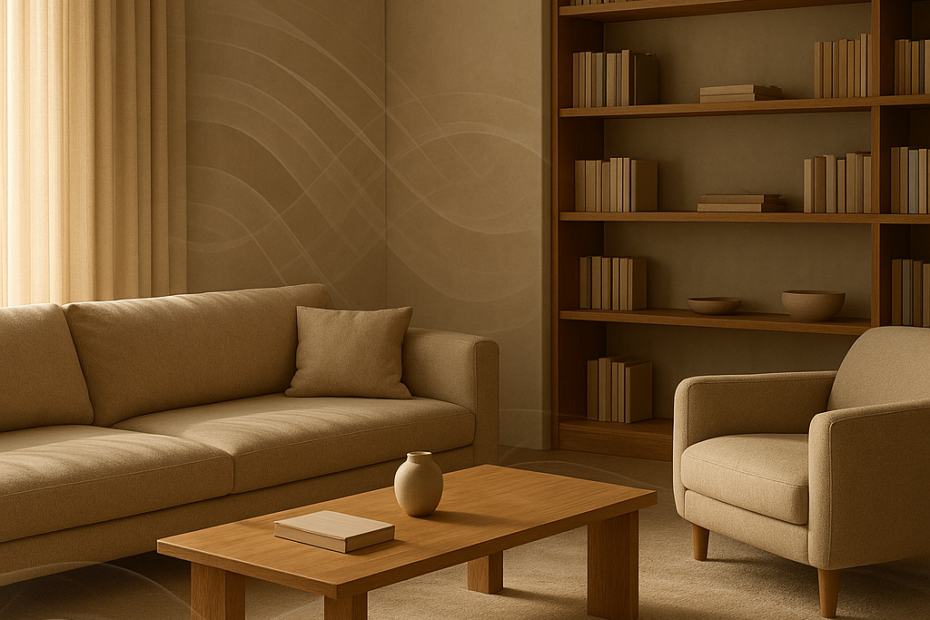
There’s a particular kind of exhaustion that comes from living in a noisy home. It’s not dramatic — nobody’s shouting, nothing’s broken — but the constant low hum of traffic, the neighbor’s TV bleeding through the wall, the echo of footsteps on hardwood floors all add up. Over time, that background noise takes a real toll on sleep, focus, and general wellbeing. The good news is that quieter living isn’t reserved for people who can afford custom construction. Acoustic design principles — the same ones architects and interior designers use — can be applied to almost any home, at any budget.
This isn’t just about slapping foam panels on the walls. True acoustic comfort is the result of thoughtful layering: the right materials, smart furniture placement, strategic soft furnishings, and an understanding of how sound actually travels. Once you understand the basics, you’ll start seeing your home differently — and hearing it more peacefully.
Understanding How Sound Travels Through a Home
Before jumping into solutions, it helps to understand what you’re actually dealing with. Sound moves in two distinct ways inside a building, and tackling just one while ignoring the other is why so many “soundproofing” attempts feel incomplete.
Airborne Sound vs. Impact Sound
Airborne sound travels through the air — voices, music, TV, traffic noise. It enters a space by causing walls, floors, and ceilings to vibrate, which then re-radiates sound on the other side. Impact sound, on the other hand, occurs when an object physically strikes a surface — footsteps, dropped items, furniture being dragged. Impact sound travels directly through the building structure itself, which is why you can sometimes feel a neighbor’s footsteps as much as hear them.
Most homes suffer from both types. Open-plan layouts in particular struggle with airborne sound because there are simply fewer barriers for it to pass through. A 2021 survey from the UK’s Office for National Statistics found that noise was among the top three reasons people reported dissatisfaction with their home environment — a finding that resonates across most Western countries, where open-concept living has become standard.
The Problem with Hard Surfaces
Modern home design has a sound problem baked right in. Hardwood floors, high ceilings, glass walls, minimal textiles — all of it looks stunning, but acoustically, it’s a nightmare. Hard, smooth surfaces reflect sound rather than absorbing it, creating reverb and echo that make spaces feel louder and more chaotic than they actually are.
This is why two homes with the same floorplan can feel completely different acoustically. One, furnished with rugs, upholstered sofas, curtains, and bookshelves, feels calm and contained. The other, with polished concrete floors and bare walls, sounds like a gymnasium.
The Core Acoustic Design Principles
Professional acoustic designers work with a few fundamental concepts. You don’t need a degree to apply them — you just need to understand what you’re trying to achieve.
Absorption: Stopping Sound in Its Tracks
Absorption is about converting sound energy into heat (a tiny, imperceptible amount) by using soft, porous materials. The more absorptive surfaces a room has, the less sound bounces around inside it. This directly reduces echo and makes the room feel quieter and more comfortable — even if the actual decibel level hasn’t changed dramatically.
Practical absorptive elements include:
- Area rugs and carpet: Even a mid-sized rug on a hard floor can reduce room reverberation noticeably. Thicker pile and an underlayment pad amplify the effect.
- Heavy curtains and drapes: Fabric at the windows does double duty — blocking outside noise and absorbing interior reflections. Velvet, linen, and heavy cotton work particularly well.
- Upholstered furniture: Sofas, armchairs, and padded headboards are passive acoustic absorbers. A fully upholstered sofa absorbs significantly more sound than a leather one.
- Bookshelves filled with books: This is one of the most underrated acoustic tools in any home. An irregular surface of books breaks up sound waves beautifully.
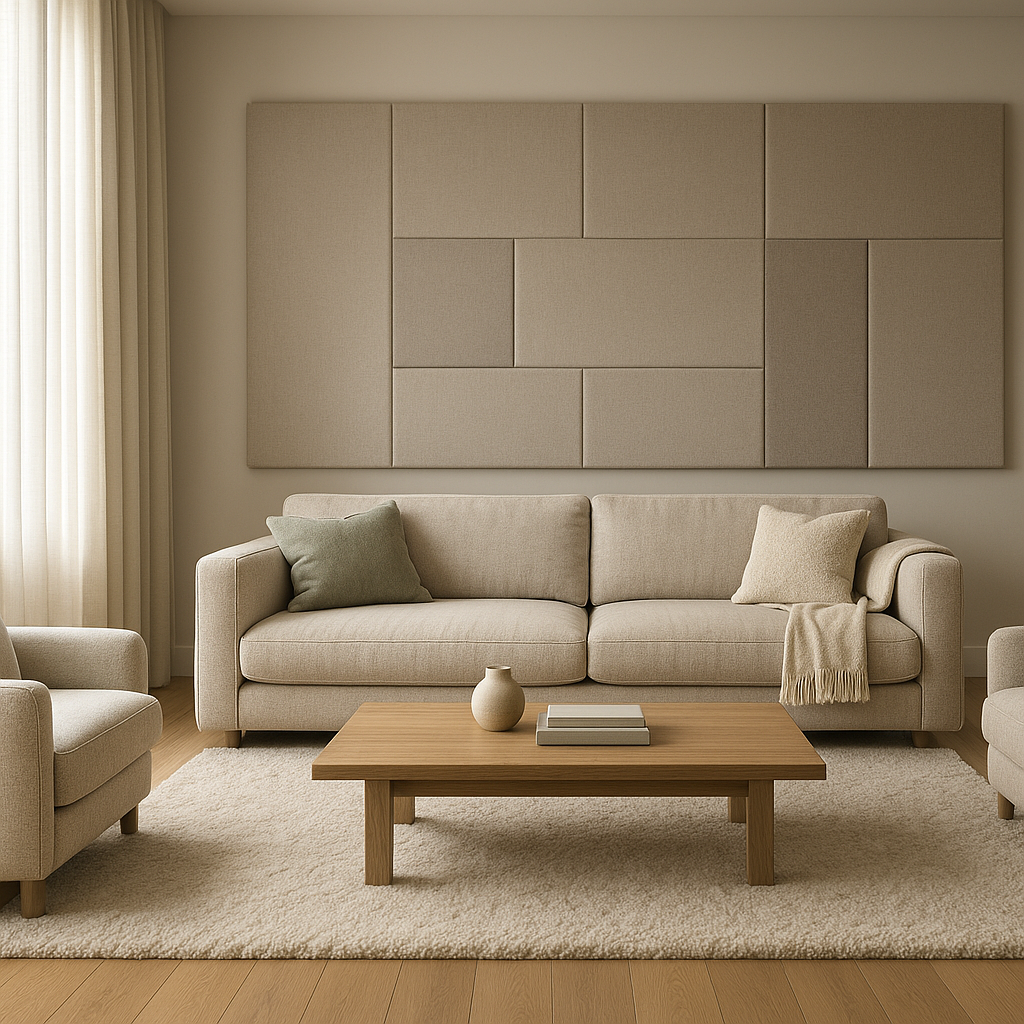
- Acoustic panels: Available in fabric-wrapped or decorative formats, these are purpose-built absorbers and can double as wall art.
Decoupling: Breaking the Path of Vibration
Decoupling is the technique of physically separating surfaces so that vibrations can’t travel easily from one to another. This is most relevant for impact noise, but it also helps with airborne sound transmission through walls and floors.
In practice, decoupling looks like:
- Floating floors — where a resilient underlayment separates the finished floor from the subfloor, interrupting the vibration path
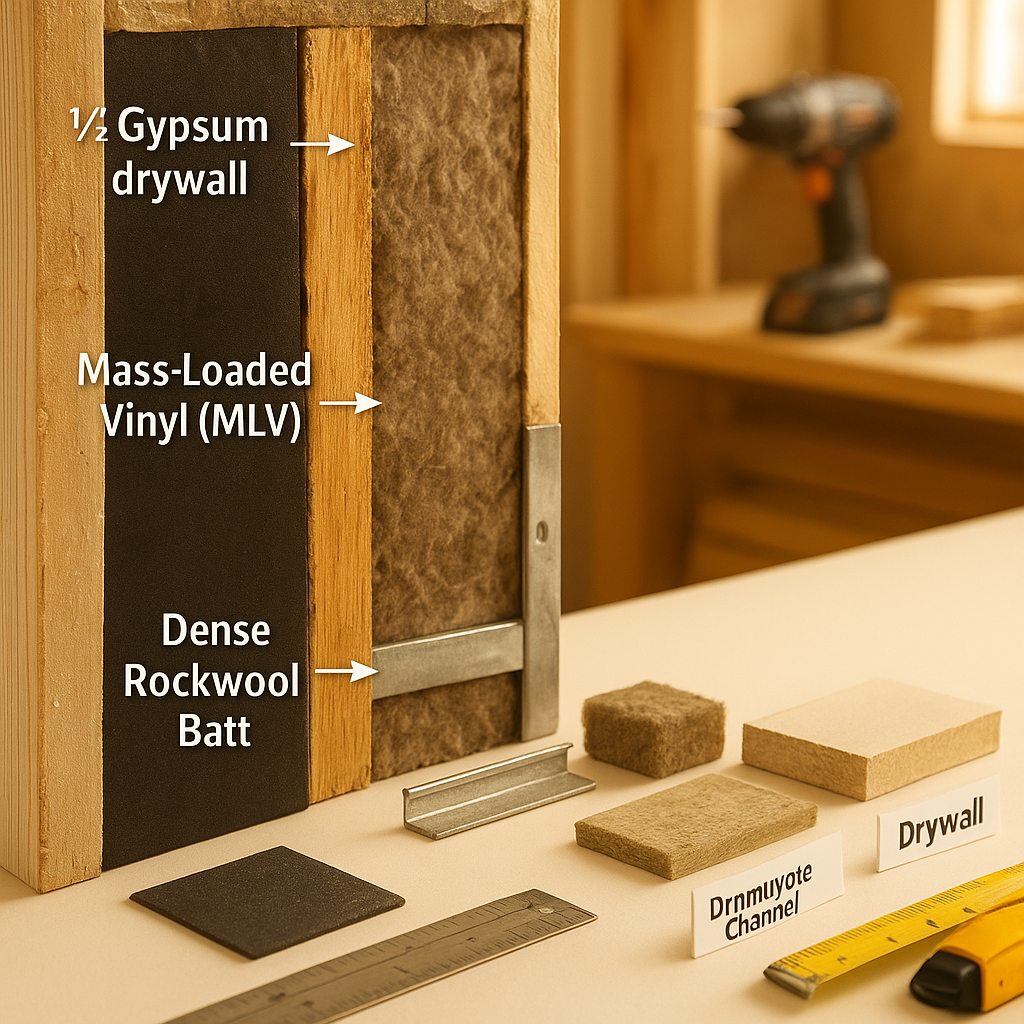
- Resilient clips and channels on walls, which hold drywall away from studs with a small air gap
- Anti-vibration feet under washing machines, dishwashers, and dryers, which prevent appliance vibration from transmitting through the floor
For most homeowners, floating floor underlayment is the most accessible form of decoupling — and it’s a game-changer in apartments or multi-story homes where footstep noise from upstairs is an ongoing frustration.
Mass: The Simplest Barrier
Sound needs energy to move mass. The heavier and denser a surface, the harder it is for sound to pass through it. This is why thick concrete walls are acoustically superior to lightweight drywall, and why adding a second layer of drywall (especially with a damping compound between the layers) can dramatically reduce sound transmission through a wall.
Adding mass isn’t always practical as a renovation, but it can inform decisions like:
- Choosing solid-core doors instead of hollow-core ones (hollow-core doors are acoustically terrible — a solid-core swap is one of the highest-impact, lowest-disruption upgrades possible)
- Adding a layer of mass-loaded vinyl beneath flooring during a renovation
- Hanging heavy artwork or tapestries on shared walls
Damping: Reducing Resonance
Damping involves reducing the ability of a surface to vibrate and re-radiate sound. Viscoelastic damping compounds — applied between layers of drywall or subfloor panels — convert vibrational energy into heat, effectively silencing the wall or floor’s contribution to sound transmission. Products like Green Glue are the most well-known consumer option in this category.
Damping is especially effective when combined with added mass — the two principles work synergistically. A wall built with two layers of drywall and damping compound between them will outperform either approach used alone.
Room-by-Room Acoustic Priorities
Not every room has the same acoustic challenges. Thinking room by room helps prioritize where to invest time and money.
Bedrooms
Sleep quality is deeply connected to nighttime noise levels. Research from the World Health Organization suggests that road traffic noise above 40 decibels at night is sufficient to disrupt sleep — a threshold that’s easily exceeded in urban and suburban environments. In the bedroom, the priorities are:
- Solid-core door with a proper door sweep to seal the gap at the bottom
- Thick blackout curtains (these typically have acoustic benefits as well)
- Sealing any gaps around electrical outlets on exterior walls
- A rug with a thick pad, especially if you’re below another occupied unit
Home Offices and Study Spaces
With remote work now a permanent fixture for millions of households, acoustic privacy in home offices has become genuinely important — both for concentration and for professional video calls. Key interventions include acoustic panels on at least one wall, a door seal kit, and a bookshelf filled with books on any shared wall. Even a small desktop diffuser or white noise machine can make a meaningful difference in perceived quiet.
Open-Plan Living Areas
Open-plan spaces are the hardest to treat acoustically because the design philosophy works against containment. The solution isn’t to close everything off, but to strategically add absorption throughout the space. A large area rug is non-negotiable. Pendant lighting with fabric shades, upholstered seating, and curtains on every window all contribute. If the ceiling is particularly high, hanging acoustic baffles — which come in decorative formats — can make a dramatic difference to how the space sounds. Incorporating natural materials like wood, wool, and cork — central to biophilic design approaches — also adds acoustic absorption while connecting a space to the natural world.
Addressing Sound from Outside
External noise is its own challenge, and the entry points are consistent: windows, doors, and any gaps or penetrations in the building envelope.
Windows are typically the weakest point in any wall. Single-pane windows offer almost no acoustic resistance. Double-glazing helps, but the biggest gains often come from adding secondary glazing (a second window panel inside the existing frame) or installing acoustic window inserts — acrylic panels that attach magnetically or via compression to create an air gap. That air gap is where the acoustic magic happens.
Gaps are disproportionately important. Acoustic energy follows the path of least resistance, and even a small gap — around a window frame, under a door, through a recessed light fixture — can undermine otherwise excellent soundproofing. Acoustic caulk, weatherstripping, and door sweeps address these vulnerabilities cheaply and effectively.
Does Furniture Layout Affect Acoustics?
It does, more than most people expect. Large, soft furniture placed against shared walls acts as both an absorber and a buffer. Bookshelves on party walls (walls shared with a neighbor) add mass and diffusion simultaneously. Placing a sofa away from the wall creates a small air gap that disrupts vibration transfer. These aren’t massive gains individually, but in combination they contribute to a noticeably quieter, more comfortable room.
Conversely, placing all the hard furniture in one area and leaving a shared wall bare is acoustically counterproductive — and it’s a surprisingly common arrangement in living rooms.
White Noise and Sound Masking
Acoustic design is primarily about reducing unwanted sound, but sound masking works differently — it raises the ambient background sound just enough to make intrusive noises less perceptible. White noise machines, pink noise generators, and even simple fans are all versions of this approach. It’s not a substitute for proper acoustic treatment, but it’s a legitimate complement to it, particularly in bedrooms and offices where intermittent noise is more disruptive than steady background sounds.
Putting It All Together
Creating a genuinely quiet home is less about any single dramatic intervention and more about the cumulative effect of many smaller, thoughtful decisions. Swap hollow doors for solid-core. Lay a rug with a proper pad. Hang heavy curtains. Fill a bookshelf on a shared wall. Seal the gaps. Add an upholstered element where the room currently has none.
Each of these changes does something. Together, they transform how a home feels — not just how it sounds. The psychological effect of acoustic comfort is real: lower stress, better sleep, improved concentration, and a general sense that the home is a refuge rather than a relay station for the world’s noise. Those building from the ground up would do well to consider acoustics among the key decisions made before construction begins, when interventions like decoupled wall assemblies and floating floors are far easier and cheaper to incorporate.
The underlying principles — absorption, mass, decoupling, and damping — work whether you’re tackling a studio apartment or a sprawling family home. Understanding them means you can make smarter choices at every stage, from furnishing decisions to renovation planning, and gradually build toward the kind of quiet that genuinely changes how you feel in your own space.